By the end of the second day, all eight tanks had been installed, completing the system. With a total capacity of 18,400 gallons, the guzzler is designed to capture and store precipitation, making water available over extended periods.
While desert bighorn sheep are the primary focus, developments like this are used by a range of species. Birds, small mammals, and other desert wildlife often utilize these water sources, particularly during peak summer conditions when natural availability is lowest.
From a wildlife management perspective, projects like this can help support population stability and expansion. In areas where suitable habitat exists but water is scarce, guzzlers can solve a limiting-factor problem, allowing animals to make use of otherwise underutilized range. This can also contribute to improved distribution across the landscape, reducing pressure on browse and existing water sources.
The project also reflects a broader pattern in wildlife conservation: reliance on partnerships. No single organization was responsible for all aspects of this effort. Funding, planning, and labor were distributed across multiple groups, each contributing based on capacity and expertise.
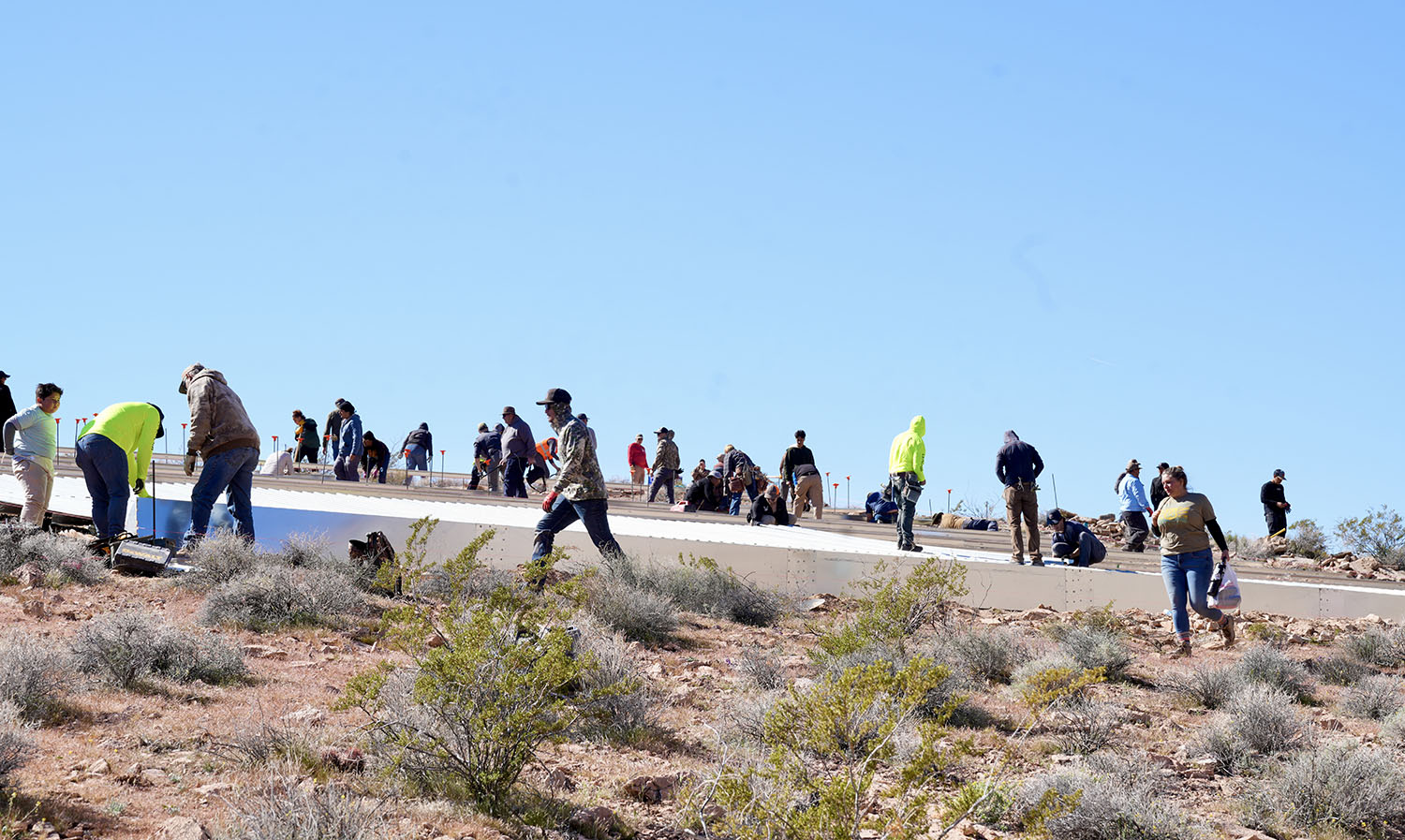
Volunteer involvement was another key component. In addition to reducing costs, volunteer labor allows for greater scale and frequency of projects. It also provides an opportunity for direct participation in conservation work, which remains an important part of the North American Model of Wildlife Conservation.
Completion of this guzzler represents the final step in a process that began with a personal passion fundraising effort and concluded with on-the-ground implementation. Funds raised through Lopez’s ultramarathon effort were applied to a defined project, resulting in a functional piece of infrastructure now in place on the landscape.
Projects like this are designed to be incremental. Each installation contributes to a larger system, with cumulative effects over time. In Nevada and throughout the desert Southwest, networks of guzzlers help sustain desert bighorn populations and other desert wildlife under variable environmental conditions.
As conditions continue to fluctuate, particularly in relation to precipitation and temperature, the need for reliable water sources remains consistent. Developments such as this one are intended to address that need in targeted locations where they can have the most impact.
With construction complete, the focus now shifts to long-term function. Properly built and maintained, guzzlers can operate for years, providing consistent water availability with minimal ongoing intervention. Monitoring and periodic maintenance will ensure that the system continues to perform as intended.
What began as a 100-mile run is now represented by a permanent addition to Nevada’s wildlife infrastructure. The outcome is straightforward: increased water availability in an environment deep in drought. The process - fundraising, coordination, and field implementation – is anything but straightforward. Seeing the project through from start to finish required impressive vision, determination, and follow-through. The finished guzzler is a testament to the extraordinary things that can be achieved for wildlife when diverse partners work together towards a common goal.
Click here to learn more about WSF habitat and water conservation projects.