Conservation interests often begin long before careers and research projects. They start with curiosity. That curiosity was on full display in Reno, Nevada, during the Youth Wildlife Conservation Experience (YWCE), a hands-on education program hosted by the Wild Sheep Foundation (WSF) as part of its annual Sheep Show.
For many youth, that curiosity takes shape through direct experience such as gripping a set of desert bighorn sheep horns for the first time, listening intently as a biologist explains how growth rings tell the story of an animal’s life, or realizing that keeping wildlife on the landscape depends on far more than good intentions.
Held at the Reno-Sparks Convention Center, the Youth Wildlife Conservation Experience transforms a portion of the Sheep Show into an interactive space dedicated entirely to youth education. Over the course of three days, an estimated 3,000 youth moved through the event, including 572 children on Thursday, 565 on Friday, and approximately 1,900 on Saturday.
Run by WSF Youth Education Coordinator Dr. Ryan Brock, the program has grown steadily year after year, becoming one of the most comprehensive youth-focused conservation education events in the country. “What we want kids to see is how conservation actually works,” Brock said. “It’s hands-on, it’s science-based, and it involves people from many different backgrounds working toward the same goal.”
Across 43 hands-on stations, youth encountered conservation as it exists in the real world, a collaborative effort shaped by science, partnerships, and problem-solving. Representatives from state and federal agencies, conservation nonprofits, universities, and outdoor education programs guided youth through interactive lessons designed to spark curiosity and encourage engagement.


 .
. 
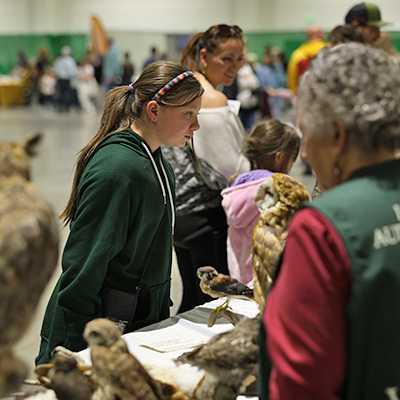
These were not passive exhibits. Youth tied fishing flies, practiced wildlife telemetry, examined animal hides and skulls, built plaster tracks, learned about the science of darting wild sheep, and explored how habitat, water, and wildlife management are connected.
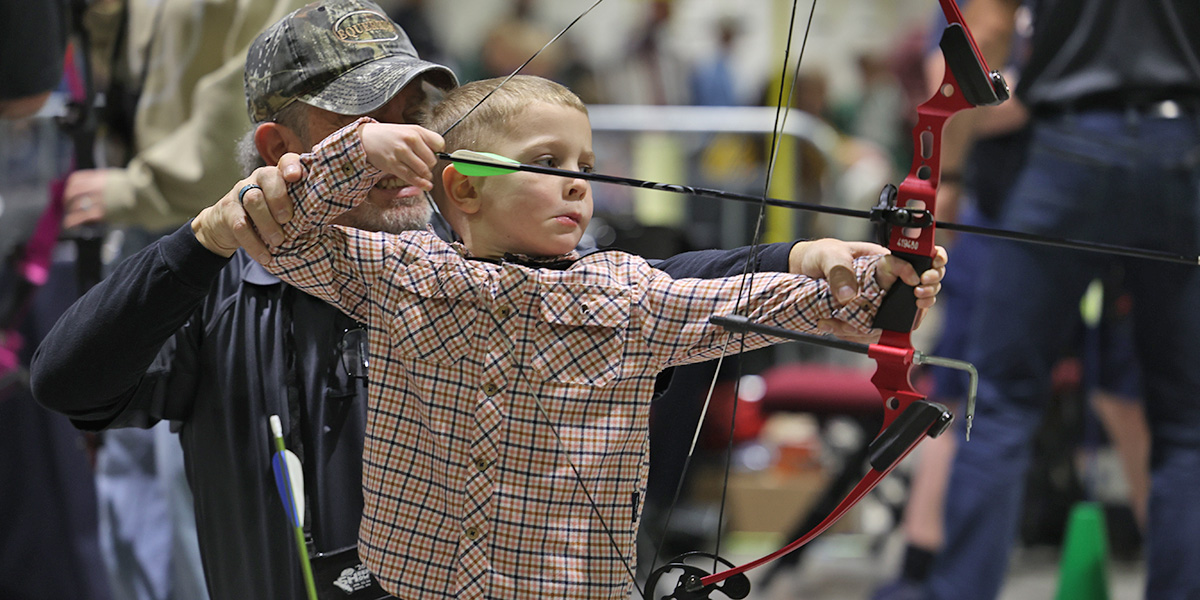
Hunting and its role in wildlife conservation were also part of the conversation. Through archery stations, shooting sports, wildlife identification, and discussions about regulated harvest and funding for conservation, youth were introduced to how ethical hunting, habitat stewardship, and science-based management intersect.
“For many kids, this is their first exposure to how hunters contribute to conservation,” Brock said. “We’re showing them that hunting is about responsibility, respect for wildlife, and sustaining healthy populations for the future.”
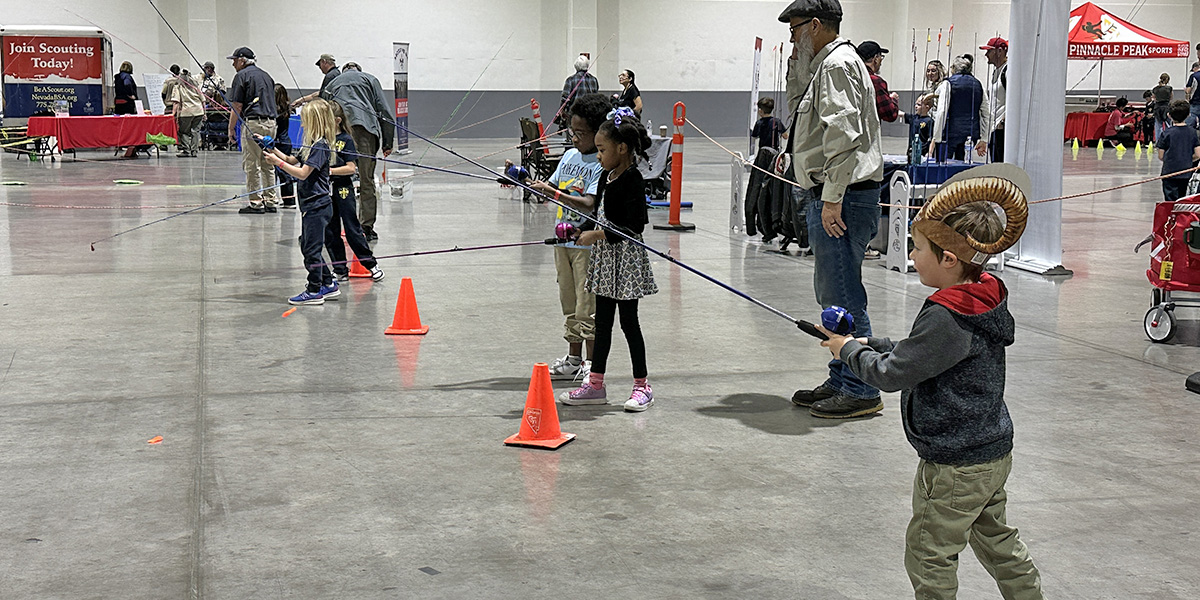
Other stations added movement and excitement. Youth tested their skills on a rock-climbing wall, practiced archery in multiple forms, including hover, stick-it, and 3D mini-course setups—shot BB guns and pellet rifles, took part in casting challenges, learned duck calling techniques, and explored aquatic conservation inside bass fishing boats.
One station introduced entomology and the role insects play in ecosystems, while another challenged kids to think like wildlife investigators through CSI-style conservation activities. Between stations, youth crossed paths with Rocky, WSF’s bighorn sheep mascot, whose presence added energy and fun while helping draw young attendees into conversations about wild sheep behavior, habitat needs, and conservation challenges.
Keynote presentations helped place these hands-on experiences within a broader conservation context. On Saturday, Dylan Stewart, a researcher with Texas A&M University, shared a visual journey into the secret lives of desert bighorn sheep in Sonora, Mexico. Using GPS tracking and animal-borne cameras, Stewart presented rare footage that allowed youth to see the world through the eyes of wild sheep, revealing daily movements, social interactions, and survival strategies in rugged desert landscapes.
Later that afternoon, Brock delivered a keynote focused on wild sheep species across North America, their unique adaptations, and the conservation efforts required to sustain populations over time. “Not every kid who comes through YWCE will become a biologist,” Brock said. “What matters is that they leave understanding why wildlife conservation matters and knowing there’s a place for them in it, whether that’s through science, hunting, volunteering, education, or simply being informed and engaged.”
 .
. 
The event is intentionally structured to reach multiple age groups. During the first two days, school groups attend private sessions featuring wildlife conservation presentations, outdoor career seminars, and hands-on learning opportunities designed to encourage exploration and curiosity. On Saturday, the event opens to the public free of charge, welcoming families for a full day of education and engagement. Taking place alongside Sheep Show allows families to engage with youth-focused conservation education within the larger context of the event.
For older youth ages 12 to 17, the Tracks Program provides an additional layer of engagement. Participants follow sheep tracks through the exhibit hall to seven participating exhibitors who offer education on conservation, wildlife, and outdoor skills. Each stop earns a punch on a Tracks card, which is entered into a special raffle drawing with prizes donated by conservation-minded companies.
Educational programming at YWCE is designed to introduce youth to the many ways people contribute to wildlife conservation, helping them better understand the roles of science, education, and stewardship in sustaining wildlife populations.
Behind the scenes, YWCE is supported by an extensive network of partners and volunteers who donate time, expertise, and resources. Funding for the program is provided in part through a dedicated annual distribution from the MidwayUSA Foundation/WSF YWCE Endowment Fund, helping ensure the program’s long-term sustainability.
“Hands-on experiences like this can spark a curiosity that lasts a lifetime,” said Corey Mason, WSF’s Chief Operating Officer and Executive Vice President of Conservation. “YWCE helps young people see that wildlife conservation isn’t something happening far away but something they can be part of, and something they can help shape.”
More than a youth activity, the Youth Wildlife Conservation Experience reflects WSF’s long-term commitment to conservation through education. By giving young people direct access to wildlife professionals, hands-on learning, hunting heritage, and real conservation stories, WSF is intentionally investing in the next generation of conservationists. For many participants, YWCE may be their first meaningful connection to wildlife conservation. For others, it may be the spark that shapes future careers, volunteer efforts, or lifelong advocacy.
And for WSF, the hope is that one day, some of the youth walking the show floor today will return, this time bringing their own children, continuing a cycle of curiosity, learning, and conservation that extends far beyond a single event.
Contributing Author: Chester Moore is an award-winning wildlife journalist, wildlife photographer, and lifelong hunter from Texas. He operates the Higher Calling Wildlife® blog and podcast and contributes to many outdoors publications.
Tags: Youth, Sheep Show