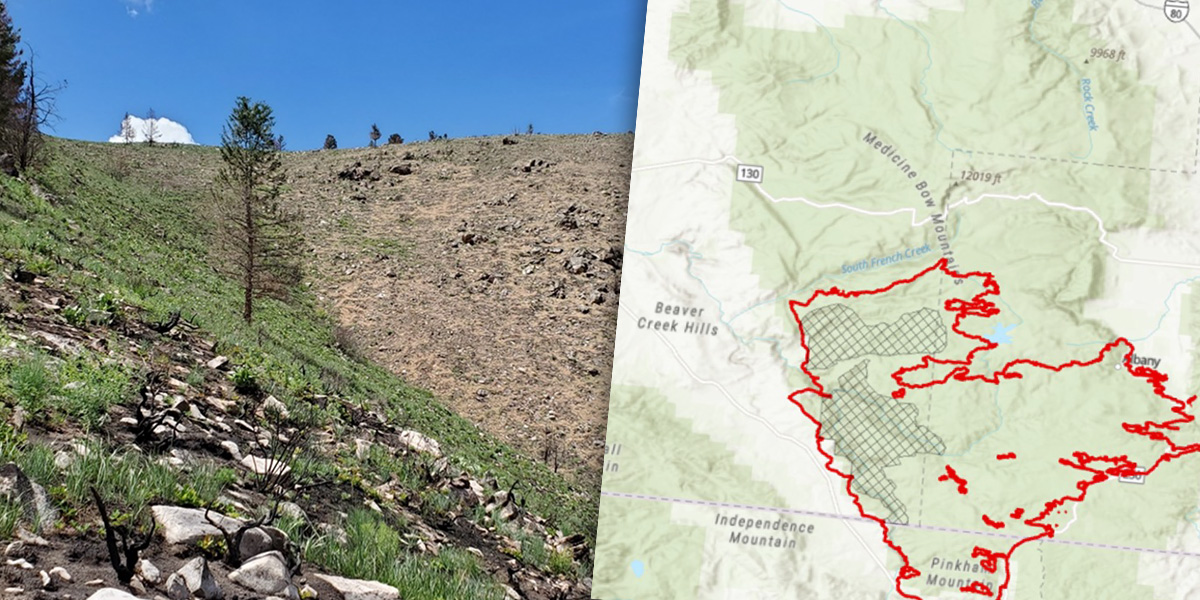
Bozeman, MT. — The Wild Sheep Foundation (WSF) and its Chapters and Affiliates collectively pledged $213,500 during the 18th Chapter & Affiliate Summit, held recently in Grand Junction, Colorado. The funds will be used to support a major cheatgrass treatment and habitat restoration effort within Wyoming’s Mullen Fire burn scar.
Hosted this year by the Rocky Mountain Bighorn Society, the annual Summit brings together volunteer conservation leaders from across North America to collaborate on wild sheep conservation priorities and collectively fund high-impact projects benefiting wild sheep and wild landscapes.
This year’s appeal project focuses on protecting crucial habitat for the Douglas Creek bighorn sheep herd following the devastating 2020 Mullen Fire, which burned more than 176,800 acres across southern Wyoming. The Douglas Creek herd, currently numbering approximately 130 bighorn sheep, occupies habitat on the western slope of the Snowy Range Mountains, much of which was consumed by the fire.
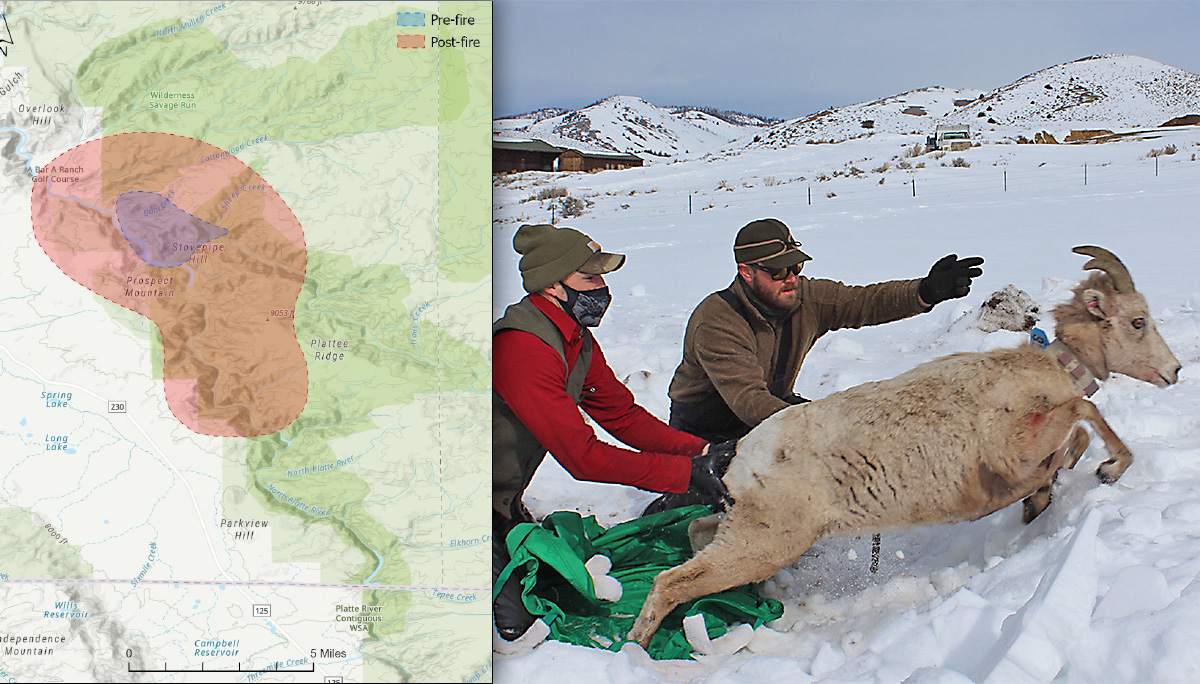
Nine GPS collars were deployed in 2019 as part of statewide disease surveillance efforts. Habitat use and movement were secondary objectives. Post fire in 2022, 19 GPS collars were deployed. Four of those were recaptured from the 2019 capture. Data shows expanded home ranges post fire
While the wildfire created opportunities for habitat renewal, invasive cheatgrass now threatens to permanently alter the recovering landscape and reduce forage quality for wild sheep and other native wildlife species.
“Full curl rams, healthy ewes, and productive lamb recruitment all depend on consistent and dense nutritional resources,” said Bralli Clifford, WSF Treasurer and President of Wyoming Wild Sheep Foundation. “Cheatgrass robs native species of moisture and nutrients, replacing diverse native forage with low-value monocultures. Without aggressive post-fire treatment, these ranges can become nutritional deserts for bighorn sheep. Early and sustained intervention is our best option to protect these herds and the habitat they depend upon.”
From 2021 through 2023, natural resource managers aerially treated more than 14,600 acres within the burn scar, resulting in significant reductions in cheatgrass and encouraging the recovery of native perennial vegetation. However, by 2024, managers identified gaps in treatment coverage, untreated areas, and new invasions of other noxious weeds, including musk thistle, Canada thistle, yellow toadflax, and wormwood.
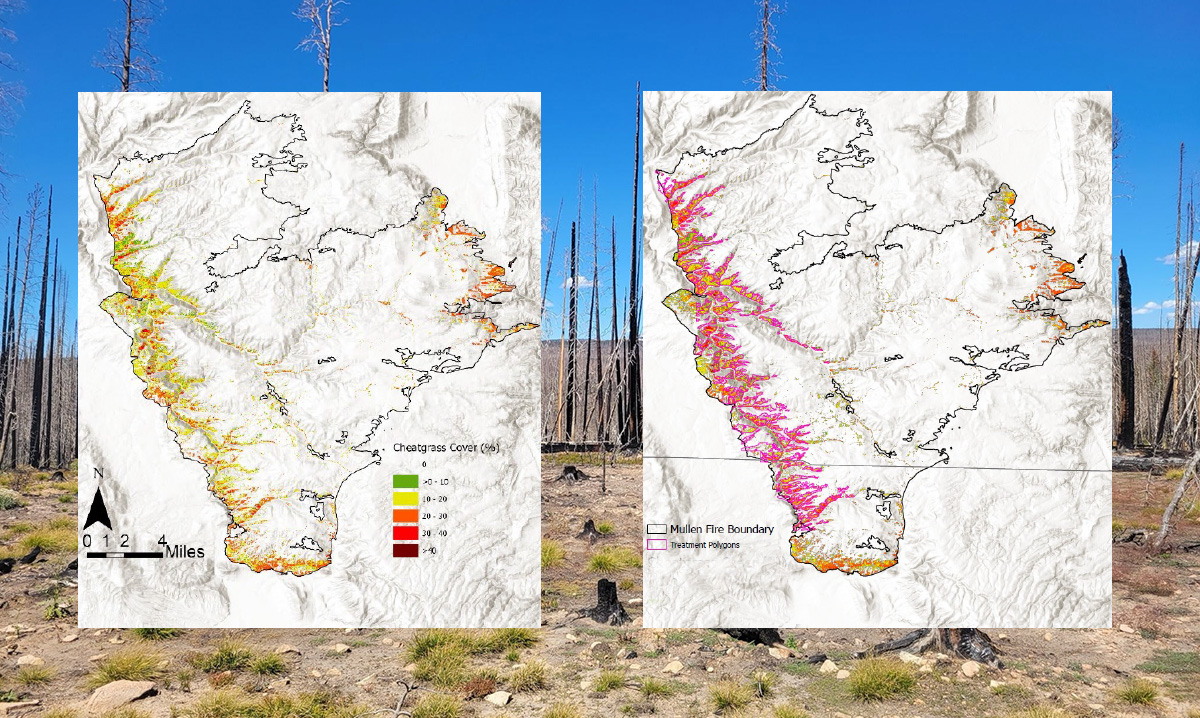
BAER assessment identified ~17,000 of native plant communities to be at risk of long term ecological degradation. Of that, 8,426 acres were identified as high risk and critical for treatment. Over 6,000 acres were in Wilderness Areas. Over a Million dollar treatment. WY-WSF first to contribute funds to leverage for treatment.
The next phase of treatment, currently underway and continuing through 2028, will target approximately 12,000 additional acres within the burn scar. Importantly, the U.S. Forest Service approved a wilderness exemption request allowing helicopter application of herbicide treatments within designated wilderness areas — a significant milestone in large-scale wilderness habitat restoration efforts.
“Habitat improvement has been a central focus of the WSF family’s Grant-in-Aid program in recent years,” said John Harris, WSF Board Member and Vice President of Wyoming Wild Sheep Foundation. “Similar projects in Wyoming have allowed bighorn sheep herds to significantly expand their range. Controlling cheatgrass in this case will ensure this healthy herd can fully utilize available habitat rather than being restricted to isolated areas. Credit is also due to the U.S. Forest Service for recognizing that effective conservation sometimes requires active management tools, even within wilderness landscapes.”
The project was presented during the Summit by Wyoming Game and Fish Department biologists, who detailed the urgency of addressing cheatgrass invasion before it becomes permanently established across the recovering ecosystem.
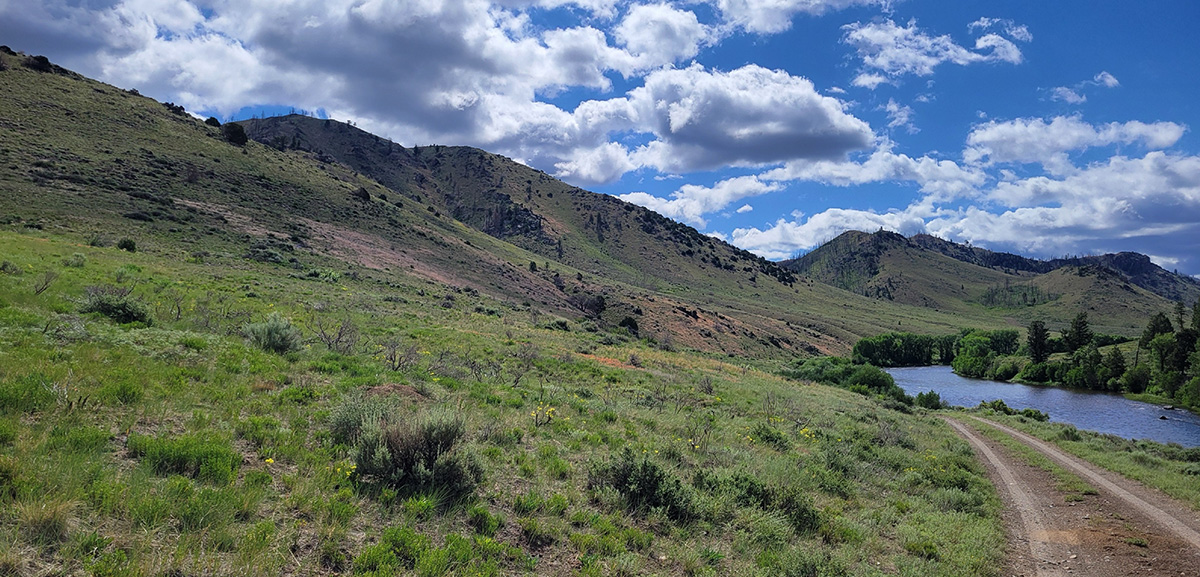
WSF opened the appeal with a leadership pledge of $50,000 on behalf of its members, immediately matched by Wyoming Wild Sheep Foundation with an additional $50,000 commitment. Additional support came from Texas Bighorn Society, Rocky Mountain Bighorn Society, Alaska WSF, Arizona Desert Bighorn Sheep Society, Wild Sheep Society of British Columbia, Midwest Chapter WSF, New Mexico WSF, Washington WSF, Idaho WSF, Iowa Foundation for North American Wild Sheep, WSF Alberta, Oregon WSF, Eastern Chapter Wild Sheep Foundation, Montana WSF, Fraternity of the Desert Bighorn, Utah WSF, and Bryan & Barbara Bartlett (NM).
The annual Chapter & Affiliate Summit demonstrates the collective strength of the WSF family and its ability to rapidly support meaningful, science-based conservation efforts that produce long-term benefits for wild sheep and the landscapes they depend on.
Tags: Conservation, Press Release