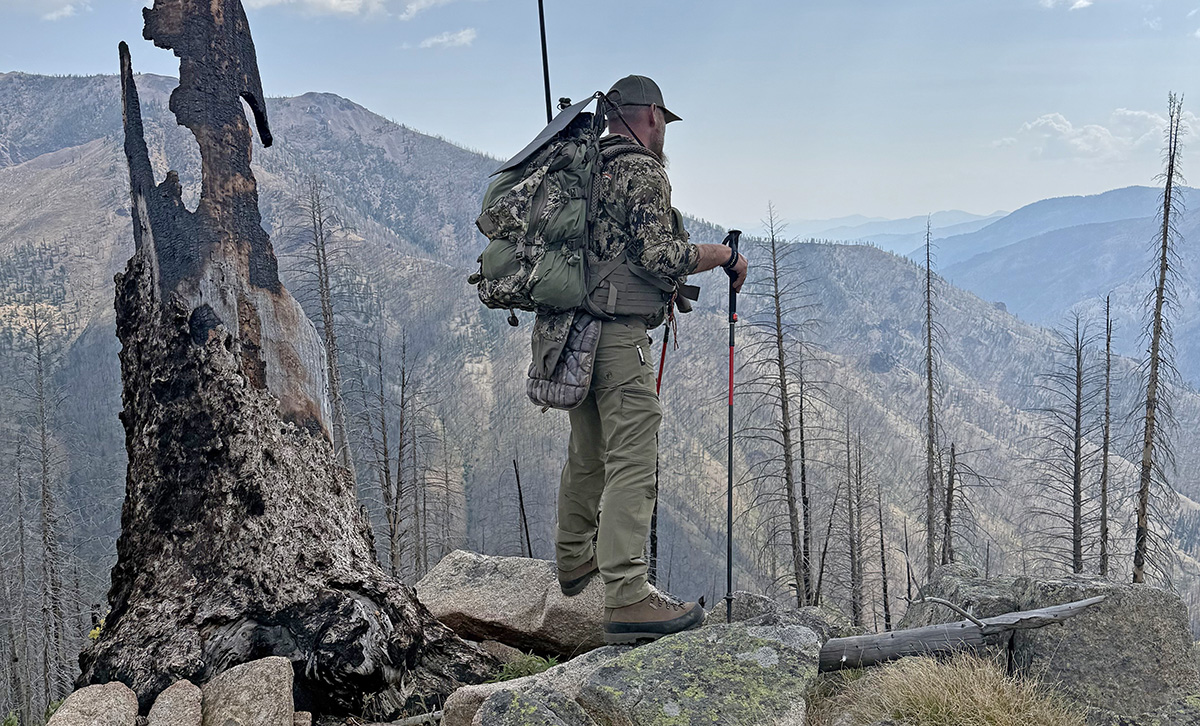
President Donald J. Trump signed the “Reinvigorating America’s Hunting Heritage” executive order Sept. 17, directing federal action on hunting access, wildlife and habitat conservation, game management and cooperation with private landowners.
The Wild Sheep Foundation (WSF) expressed support for the order.
“WSF applauds the administration’s continued emphasis on hunting access, voluntary work with landowners, and care for public lands as vital parts of wildlife conservation.”
For wild sheep conservation, some of the most significant language in the order focuses on game populations, habitat and active wildlife management.
Under a section titled “Promoting Robust Game Species Populations,” federal agencies are directed to coordinate with state wildlife agencies on management practices and conservation plans. The order calls for reducing invasive species, habitat degradation, disease and other factors contributing to population declines. It also calls for targeted management of predators, competing species and other population-limiting factors.
The order goes further by identifying tools to improve habitat and connectivity, including prescribed fire, vegetation management, water development, grazing and agricultural practices. It also calls for reducing barriers to wildlife movement and pursuing voluntary agreements with private landowners and agricultural producers.
The order gives considerable attention to access. Within 180 days, several federal departments are directed to propose changes to policies or regulations that prohibit or restrict access to lands under their jurisdiction, subject to exceptions outlined in the order. The directive generally calls for allowing hunting unless a specific closure is justified by local resource conditions, with national parks and most national monuments excluded from the access provision.
The order also calls for improving public access to difficult-to-access federal lands and waters through voluntary access easements, land exchanges, cooperative agreements with state and local governments and other tools that respect private property rights. It also addresses construction, repair and maintenance of infrastructure used for outdoor recreation and wildlife management.
One access provision is particularly significant to the wild sheep community. Within 90 days, the Secretary of the Interior is directed to allow hunting at Castle Mountains National Monument in California of species not subject to Section 4 of the Endangered Species Act. The monument, located in the Mojave Desert, supports desert bighorn sheep.
“The Castle Mountains National Monument was wrongly closed to hunters and now we can look forward to correcting that error,” WSF said.
The same directive applies to Craters of the Moon National Monument and Preserve in Idaho, where wildlife includes elk, mule deer and pronghorn.
The order also addresses access for hunters with disabilities, directing agencies to allow assistive technology on access trails and at hunting locations. It directs agencies to permit traditional lead ammunition and fishing tackle. Within 365 days, the Secretary of the Interior is directed to encourage state fish and wildlife agencies to promote and expand Sunday hunting opportunities on state and federal lands.
Growing a new generation of hunters gets its own section in the order.
The Departments of Labor and Education are directed to clarify the use of federal education funding for archery and hunter education programs in schools. The Department of the Interior is also directed to identify additional opportunities and incentives to help states cultivate hunting traditions among youth and veterans.
The Department of Veterans Affairs is directed, to the extent permitted by law, to give priority to grants supporting hunting and fishing through its Adaptive Sports Grant Program.
Another section focuses on increasing wild game donations. The Department of Agriculture is directed to issue guidance supporting state-based venison donation programs, while the Department of the Interior is directed to encourage state wildlife agencies to use Pittman-Robertson funds to manage hyperabundant wildlife populations, especially whitetail deer. Those efforts can include facilitating the donation and processing of wild game for schools and food banks.
Other provisions encourage the use of qualified volunteers in wildlife and invasive-species management, direct improvements to the administrative process for seasonal migratory game bird hunting and call for review and reform of high-demand Forest Service river-access lotteries.
Many of the provisions now move to individual federal departments and agencies for implementation, with deadlines ranging from 60 days to one year. WSF will watch that implementation closely as the directives move from the executive order into wildlife management, habitat conservation and hunting access.
Read the full executive order here.
About the Wild Sheep Foundation
The Wild Sheep Foundation (WSF), based in Bozeman, Montana, is a leading international conservation organization dedicated to wild sheep and their habitats. Founded in 1977 by sportsmen and conservationists, WSF has invested more than $156 million in conservation efforts worldwide.
Through initiatives focused on habitat enhancement, population restoration, scientific research, education, and advocacy, WSF works to fulfill its mission to “Put and Keep Wild Sheep on the Mountain®.” These efforts have helped restore North American bighorn sheep populations from historic lows of approximately 25,000 in the mid-20th century to more than 85,000 today.
WSF serves a global membership of more than 11,000 supporters and collaborates with partners across North America, Europe, and Asia to ensure a sustainable future for wild sheep. Learn more at www.wildsheepfoundation.org.
Photo courtesy Jory Schmeling | Annuli Photo Contest Submission
Tags: Press Release, Hunting