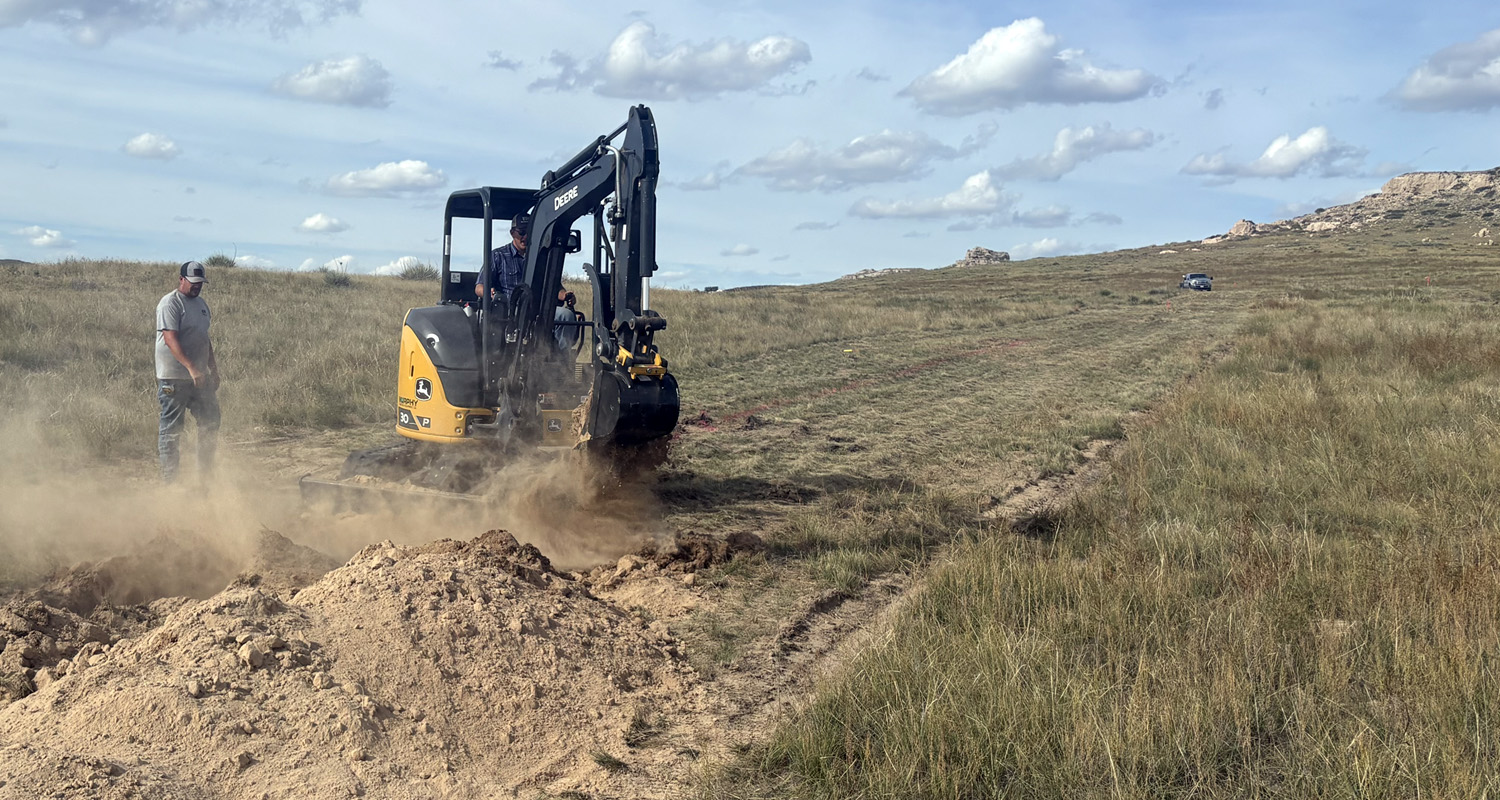
In the rugged country of western Nebraska, a new facility is taking shape that could help give the state's struggling bighorn sheep herds a brighter future. Located between the Wildcat Hills and Pine Ridge, the new project will give wildlife managers a tool to combat disease, rebuild herds and return sheep to suitable habitat.
It's the latest chapter in a restoration story that began more than four decades ago.
After disappearing from Nebraska in the early 1900s, bighorns began returning in 1981 through ambitious restoration efforts that started with sheep brought from Custer State Park in South Dakota. But keeping these magnificent animals on the landscape has proven challenging. The biggest concern is Mycoplasma ovipneumoniae (Movi), a deadly respiratory pathogen that has wreaked havoc in bighorn sheep populations throughout their range. Predation and dwindling opportunities to bring in sheep from other states have further complicated wildlife managers' work.
The new high-fenced facility is designed to do more than hold animals. It could help biologists identify sheep suitable for future releases and unravel some of the mysteries that continue to challenge bighorn conservation.
The Wild Sheep Foundation (WSF) awarded $50,000 through its Grant-in-Aid program to help make the project a reality. Located in Sioux County, the facility's semi-remote setting provides suitable sheep habitat along with opportunities to implement biosecurity measures.
For Todd Nordeen, Big Game Research and Disease Program Manager for the Nebraska Game and Parks Commission, the project grew from a problem facing wild sheep managers across the country: finding suitable animals for translocation has become increasingly difficult. “It’s just become very difficult to find and get clean sheep,” Nordeen said.
Disease concerns have limited bighorn movement between states, forcing Nebraska managers to consider using animals from their own herds to restore populations in suitable but unoccupied habitat. Although Nebraska's existing herds have experienced infections, Nordeen said managers want to work with the sheep they already have and develop a safe approach to moving animals into unoccupied habitat.
“Let’s try to work with what we got for the most part,” Nordeen said.
The concept itself is not new. Nebraska's bighorn restoration program began with a high-fence operation, while New Mexico has used similar facilities for decades and Utah has developed a propagation facility. “It worked,” Nordeen said of Nebraska’s original operation.
WSF President and CEO Gray N. Thornton said wild sheep, particularly bighorn sheep, have required intensive management to rebuild and strengthen their populations since the population lows of the late 1960s and early 1970s.
“Translocations, rearing source herds in safe locations for future translocations, habitat improvement, including noxious weed and invasive species removal, Rx burns, conifer removal, predator control, nutritional research, and test and remove actions are all examples of the intensive management needed to increase the resiliency and expand the populations of both bighorn and thinhorn sheep,” Thornton said.
He emphasized those same principles are central to Nebraska’s efforts to secure a brighter future for its bighorns.
“Nebraska’s new restoration facility is another visionary example of innovative intensive wildlife management. WSF is very proud to support this facility, not only for its purpose, but with financial support to break ground, and begin a new chapter of bighorn restoration in Nebraska,” Thornton said.
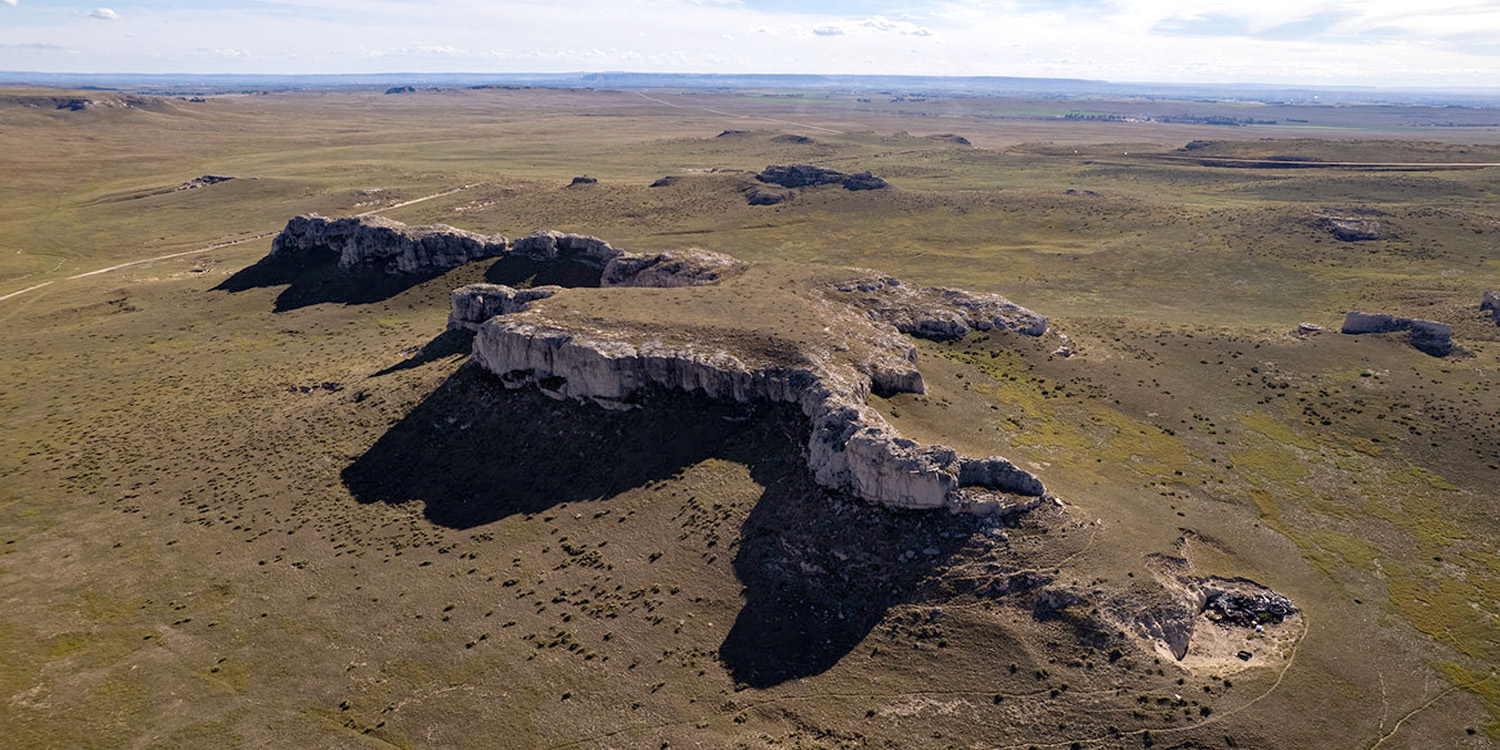
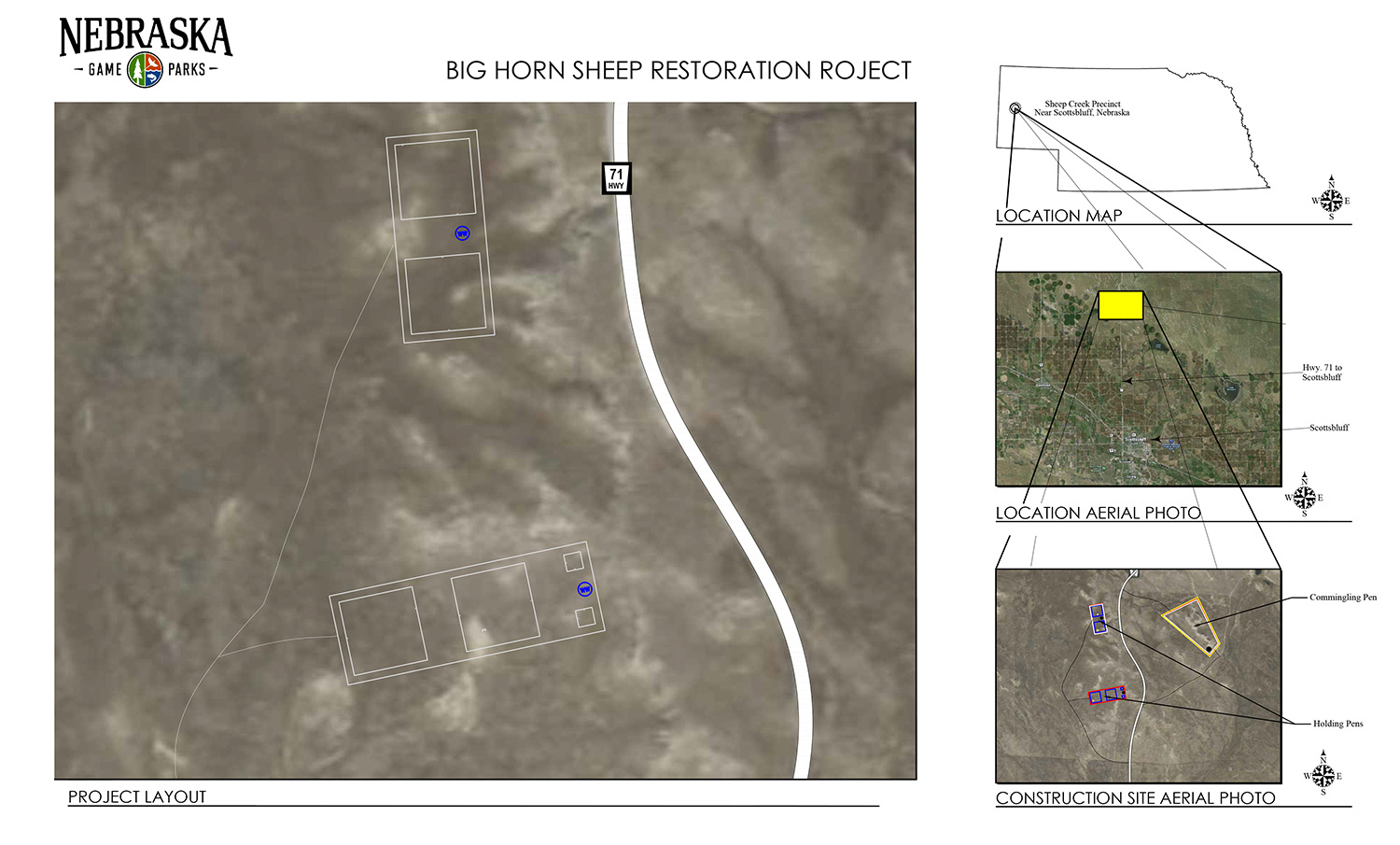
Finding the right location for the new facility was critical. Managers settled on a site between Nebraska’s two primary bighorn ranges, the Wildcat Hills and Pine Ridge. The area features rough buttes and escarpments that provide suitable habitat while limiting exposure to domestic sheep and goats and reducing possible conflicts with mountain lions.
“We looked outside of traditional mountain lion range, which also coincides with the bighorn range,” Nordeen said. “And of course, looking to where there weren't any domestic sheep and goats in close proximity, we found this spot that had suitable habitat and then approached a private landowner and was able to negotiate a long-term lease agreement,” he said.
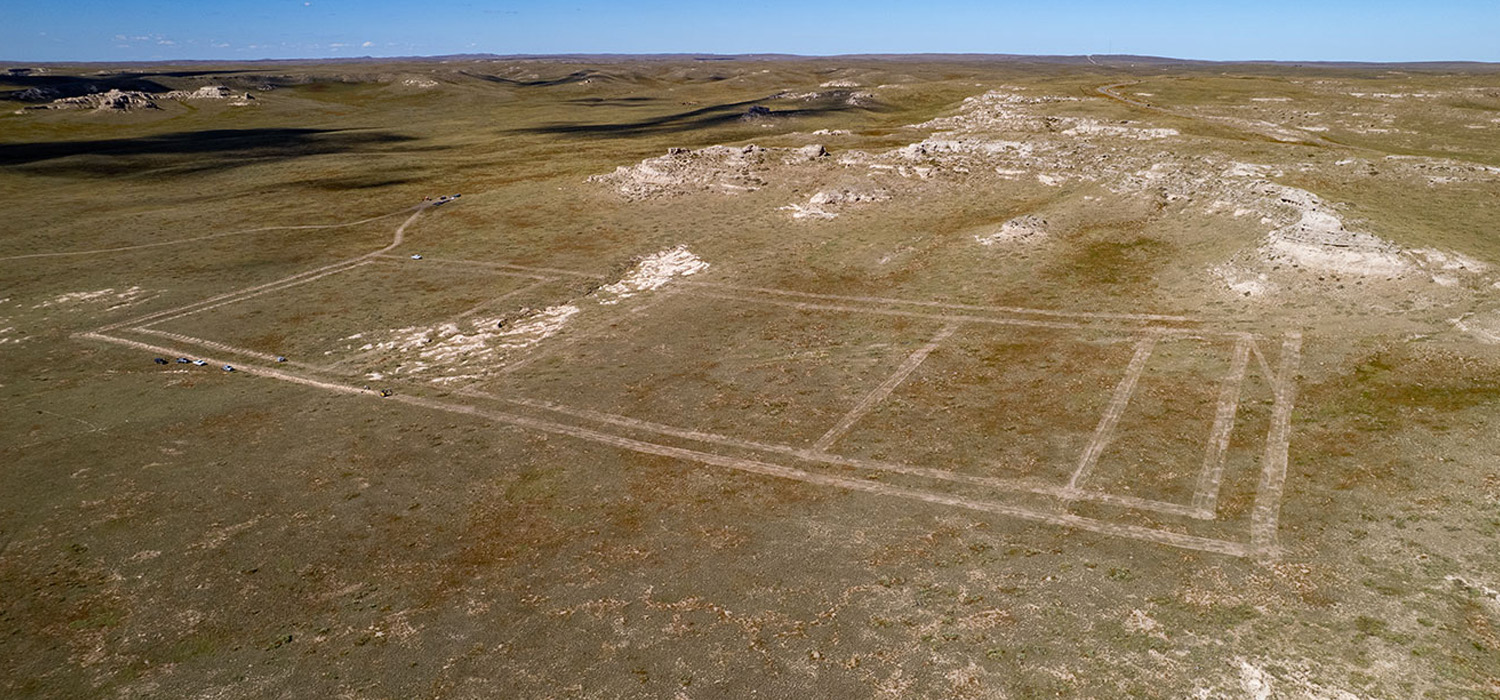
Construction is moving forward in stages, with the first quarantine section expected to be completed by the end of November 2026. That section will include two five-acre holding pens and two quarter-acre isolation pens within a double-fenced enclosure. A second set of holding pens is targeted for completion in early February 2027, followed by an approximately 30-acre acclimation area encompassing natural bighorn habitat.
Identifying sheep carrying Movi will be central to the facility's work. Through a test-and-remove approach, managers will conduct repeated testing to distinguish chronic carriers, intermittent carriers and animals that consistently test negative. Those testing negative could eventually be moved into a larger commingling enclosure, where managers hope to assemble groups suitable for release.
Nordeen said managers hope to assemble a group of 25 to 30 sheep before translocation, following Wild Sheep Working Group capture-and-handling guidelines.
The first animals are expected to come from the Pine Ridge, where the remaining population has fallen to just 11 sheep. “We’re going to go grab all the remaining Pine Ridge sheep,” Nordeen said.
Managers hope to capture those animals in February 2027 and begin testing and separating them by disease status. Once the operation is established and managers have worked through the challenges of handling and testing sheep in the new enclosures, animals from the Wildcat Hills could follow.
The long-term objective is to restore a viable bighorn population to the Pine Ridge while also decreasing disease prevalence in the Wildcat Hills.
The project could eventually open another important door. Nordeen said the operation could also make other states more comfortable providing sheep for Nebraska’s restoration efforts. “It’ll give them a greater level of comfort that they’re not just passing them on to another state where they’re just going to eventually get an outbreak and die,” Nordeen said.
That possibility could matter, as wildlife agencies across the West struggle to find suitable source populations for restoration projects. But Nordeen emphasized that the facility doesn't guarantee protection against future disease outbreaks. “It’s not anything that, you know, is going to totally prevent an outbreak,” Nordeen said.
“Hopefully, it’s going to reduce the risk of transmission or contact with domestic sheep, but just getting clean sheep on the landscape again and then trying to also continue to mitigate the other issues,” Nordeen said. And with wild sheep, there always seems to be another issue or another mystery.
In 2026, Nebraska biologists encountered a particularly interesting one in the Wildcat Hills, where the primary Hubbard Gap herd experienced an unexpectedly low pregnancy rate.
“We had a very low pregnancy rate this year,” Nordeen said. “And I mean, it was like, of the sheep that we captured and tested, it was like 25 percent.” He said the low pregnancy rate appeared to go beyond the sampled animals, potentially reducing overall lamb production to about half its usual level.
One possible explanation involves bluetongue virus exposure the previous year. Nordeen said the virus can contribute to reproductive problems, including sterility and early-term abortions, although the cause of the low pregnancy rate remains unresolved. Despite the reduced production, the lambs that were born have fared remarkably well.
“Right now we’re at 89 percent survival,” Nordeen said. Then things got even more interesting.
“We’ve seen some other lambs born later than normal and we just had one born September 20th,” Nordeen said.
May and June are Nebraska’s primary lambing months. While managers occasionally see lambs born in July or August, Nordeen said the latest birth he could recall was around Sept. 1. A Sept. 20 birth was something different.
“This particular ewe is an older ewe and she would have had to have cycled about March, mid-March or something like that,” Nordeen said.
The unusual timing prompts questions about whether some ewes failed to become pregnant during their normal breeding cycle or experienced early pregnancy loss before breeding again. The answers remain elusive, but that is part of what makes the new restoration facility so promising.
By letting managers observe and test sheep more closely, the project could offer insights into disease, reproduction and other factors affecting the future of Nebraska’s bighorns. Nebraska offers limited bighorn sheep hunting opportunities, with tags available through a draw and a conservation permit auction. The state's efforts have produced some impressive results, including massive rams taken by hunters in recent years.
Restoring bighorns is the big goal, and sometimes getting there means solving one wild sheep mystery at a time.
Tags: Bighorn Sheep, Grant-in-Aid, Conservation