Bozeman Montana – The Wild Sheep Foundation (WSF) applauds the Department of Interior and U.S. Fish and Wildlife Service's recommendations following a comprehensive review of the National Wildlife Refuge System. The findings emphasize active habitat management, stronger conservation partnerships, and a renewed commitment to field-based wildlife management benefiting wildlife and the American public.
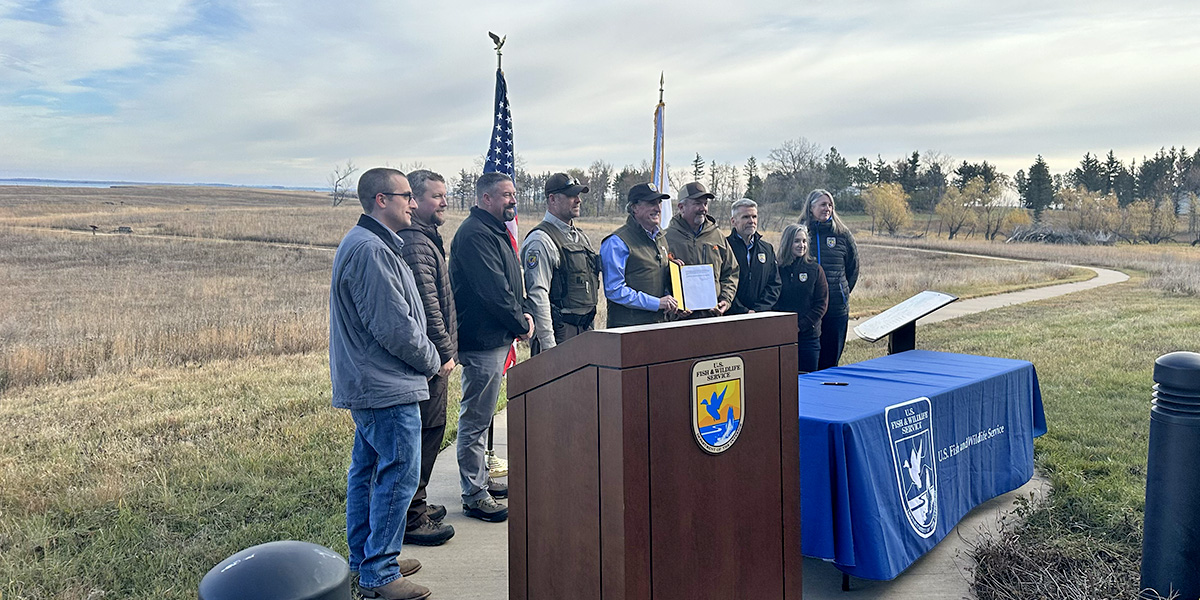
The recommendations were announced November 6 at Audubon National Wildlife Refuge north of Bismarck, North Dakota, with U.S. Department of the Interior Secretary Doug Burgum and U.S. Fish and Wildlife Service Director Brian Nesvik participating.
“The USFWS refuge system has been an important part of the conservation successes in North America. We applaud Secretary Burgum and Director Nesvik’s efforts to refocus the refuge system on the field work necessary to ensure quality habitat for wildlife and opportunity for Americans to benefit from that work and access these unique places,” said Corey Mason, WSF Chief Operating Officer and Executive Vice President of Conservation.
The review examined the structure and function of the Refuge System through staff surveys, site visits, and consultation with agency personnel and conservation partners, providing a framework for strengthening management across the nation's wildlife refuges.
The National Wildlife Refuge System holds a unique place in American conservation as the only system of federal lands and waters dedicated specifically to wildlife conservation. Its refuges provide habitat for a wide variety of species while affording opportunities for hunting, fishing, wildlife viewing, photography, and environmental education.
Several national wildlife refuges support wild sheep, including Nevada's Desert National Wildlife Refuge. Established in 1936 to conserve desert bighorn sheep, it encompasses about 1.6 million acres and is the largest national wildlife refuge in the contiguous United States. Its history reflects the Refuge System's important role in conserving wild sheep and their habitats.
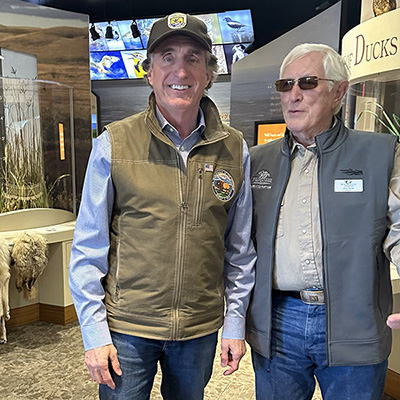 |
U.S. Department of the Interior Secretary Doug Burgum and WSF Board Member John Harris.
|
WSF supports the review's emphasis on active habitat management, including grazing, agriculture, and forestry. Recommendations also call for moving more personnel into the field, strengthening staff training on the refuge mission and hunting and fishing, and improving accountability for completing and implementing management plans.
The review also recommends concise reporting on refuge activities and accomplishments, more personnel with diverse management skills, and flexible deployment of specialists for invasive species work, maintenance, and heavy equipment operations. It also stresses the importance of law enforcement specialists for public safety.
The review recognizes that successful wildlife conservation reaches beyond refuge boundaries. Stronger relationships with neighboring landowners, improved coordination through the Partners for Fish and Wildlife Program, dedicated personnel working with conservation organizations, and improved contracting can support habitat management across broader landscapes.
The recommendations also emphasize the importance of hunting and fishing within the National Wildlife Refuge System and the contributions of hunter-conservationists to its success. Through programs such as the Federal Duck Stamp, hunters and other conservationists have helped fund the acquisition of millions of acres within the Refuge System. At the same time, the Pittman-Robertson Act has provided significant funding for wildlife conservation nationwide.
Hunter-based conservation organizations have also supported wildlife management and habitat conservation through funding and partnerships with state and federal wildlife agencies, including cooperative conservation actions on federal refuge lands.
The Wild Sheep Foundation looks forward to working with the U.S. Fish and Wildlife Service and conservation partners as they implement these recommendations to improve habitat, strengthen wildlife management, and provide outdoor opportunities for future generations.
About the Wild Sheep Foundation
The Wild Sheep Foundation (WSF), based in Bozeman, Montana, is a leading international conservation organization dedicated to wild sheep and their habitats. Founded in 1977 by sportsmen and conservationists, WSF has invested more than $156 million in conservation efforts worldwide. Through initiatives focused on habitat enhancement, population restoration, scientific research, education, and advocacy, WSF works to fulfill its mission to “Put and Keep Wild Sheep on the Mountain®.” These efforts have helped restore North American bighorn sheep populations from historic lows of approximately 25,000 in the mid-20th century to more than 85,000 today.
WSF serves a global membership of more than 11,000 supporters and collaborates with partners across North America, Europe, and Asia to ensure a sustainable future for wild sheep. Learn more at www.wildsheepfoundation.org.
Tags: Advocacy, Press Release