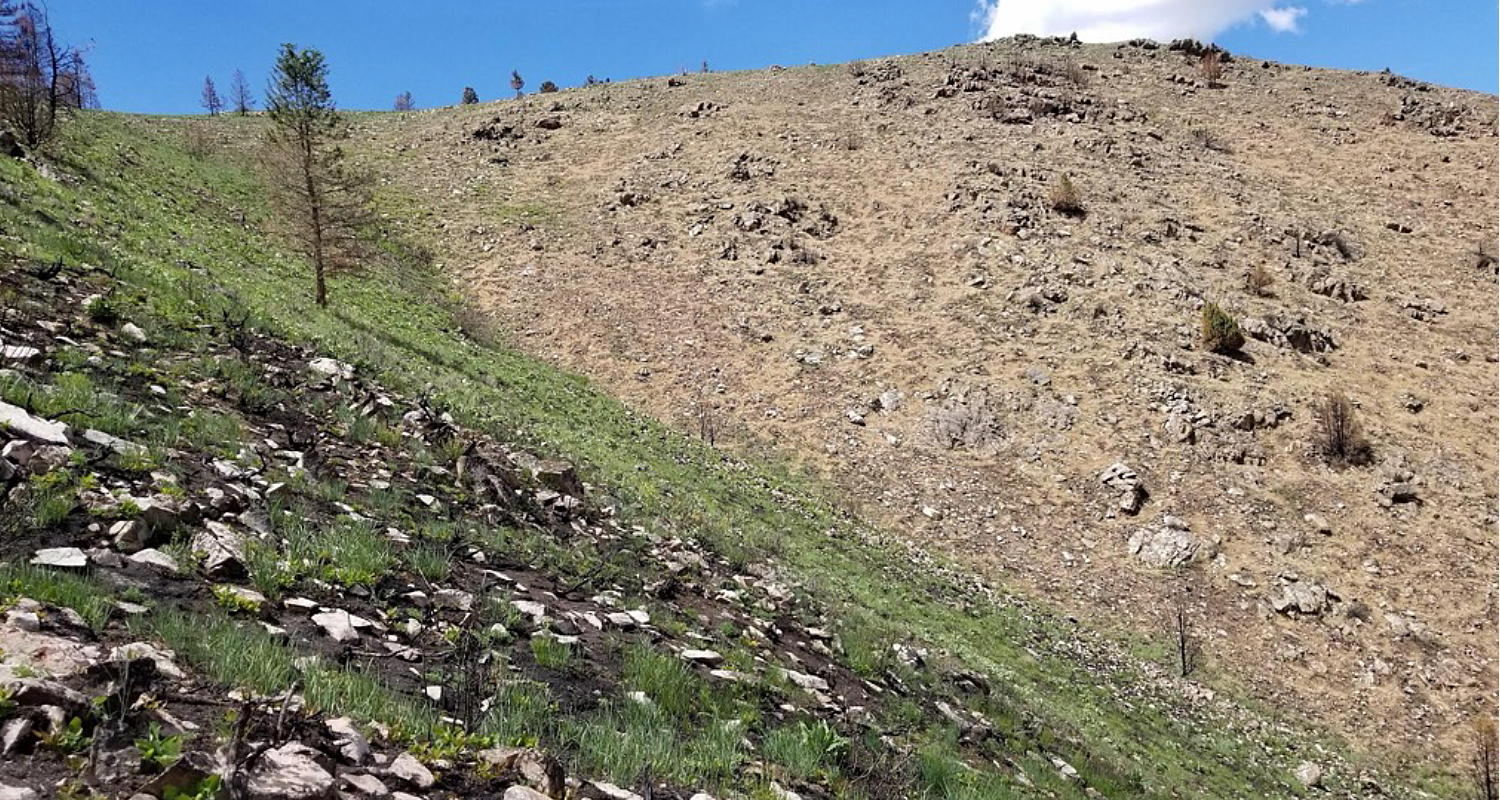
Mullen Fire June 2021. Cheatgrass infestation on south-facing slope.
Catastrophic wildfires open a pathway for rapid spread of invasive and noxious weeds. One invasive annual grass, Bromus tectorum or cheatgrass, flourishes in this disturbance, taking advantage of the open niches left by damaged or removed perennial grasses and plants.
Cheatgrass will do what it does best—‘cheat’ native plant communities out of early spring moisture during important ecosystem recovery following a wildfire. Natural recovery and plant recruitment success following a large disturbance, like a massive wildfire, can vary depending on a multitude of factors, such as soil health and precipitation, but arguably the most important aspect is the presence of native, desirable plants prior to the disturbance. Natural resource managers can influence ecosystem rehabilitation and restoration through invasive species control. By controlling cheatgrass and other noxious weeds in the burn scar, we can give native plants a headstart on recovery and rebuild critical wildlife habitats.
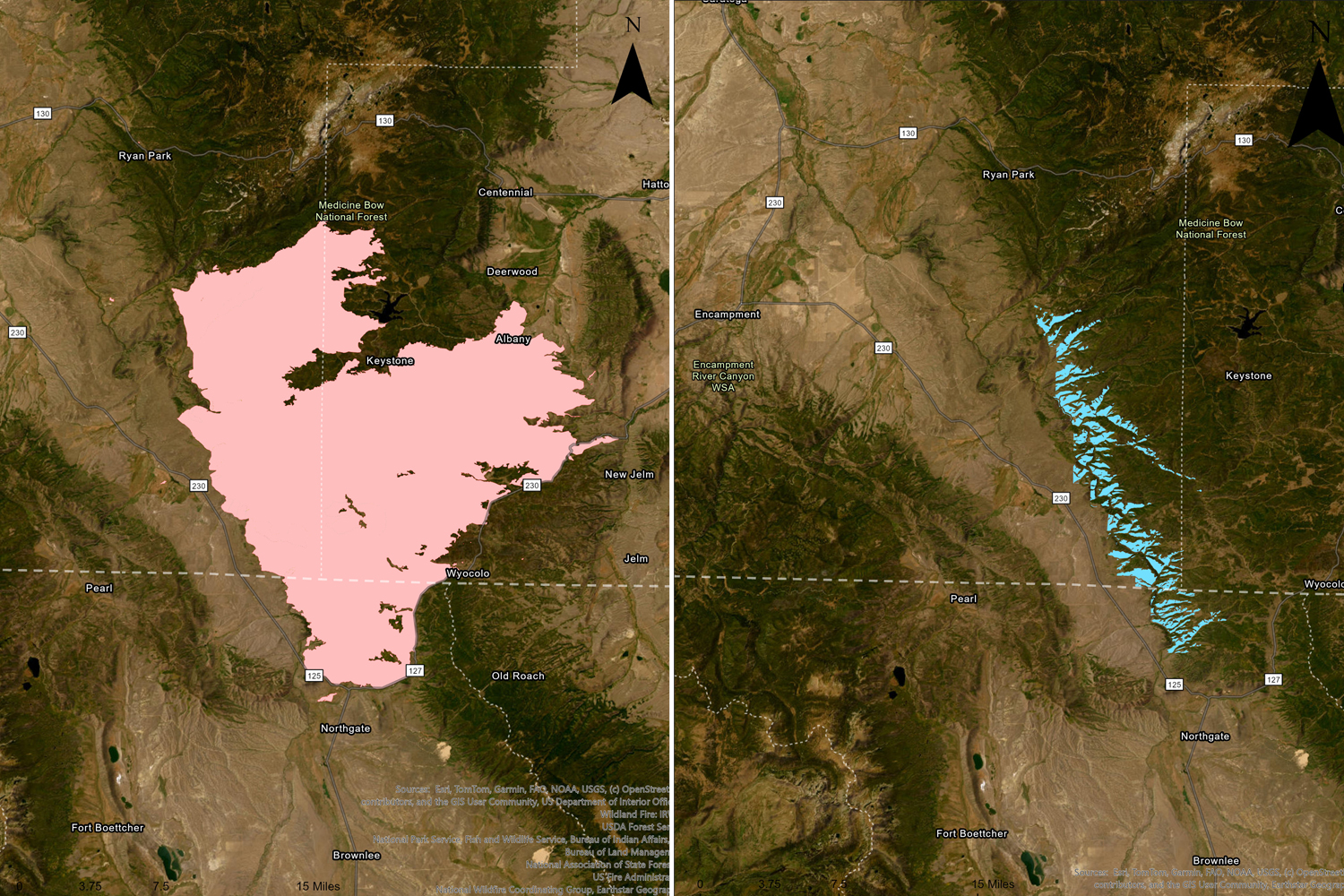
In the fall of 2020, the Mullen Fire burned approximately 176,850 acres across the Medicine Bow-Routt National Forest in south-central Wyoming. This fire burned hot and spread quickly due to dry, windy conditions. Almost two-thirds of the total burned acres were recorded as moderate to high soil burn severity within the Burned Area Emergency Response (BAER) assessment. Given the propensity for cheatgrass to spread quickly post-fire, natural resource managers recognized the need for immediate treatment to prevent ecological degradation in important wildlife habitats.
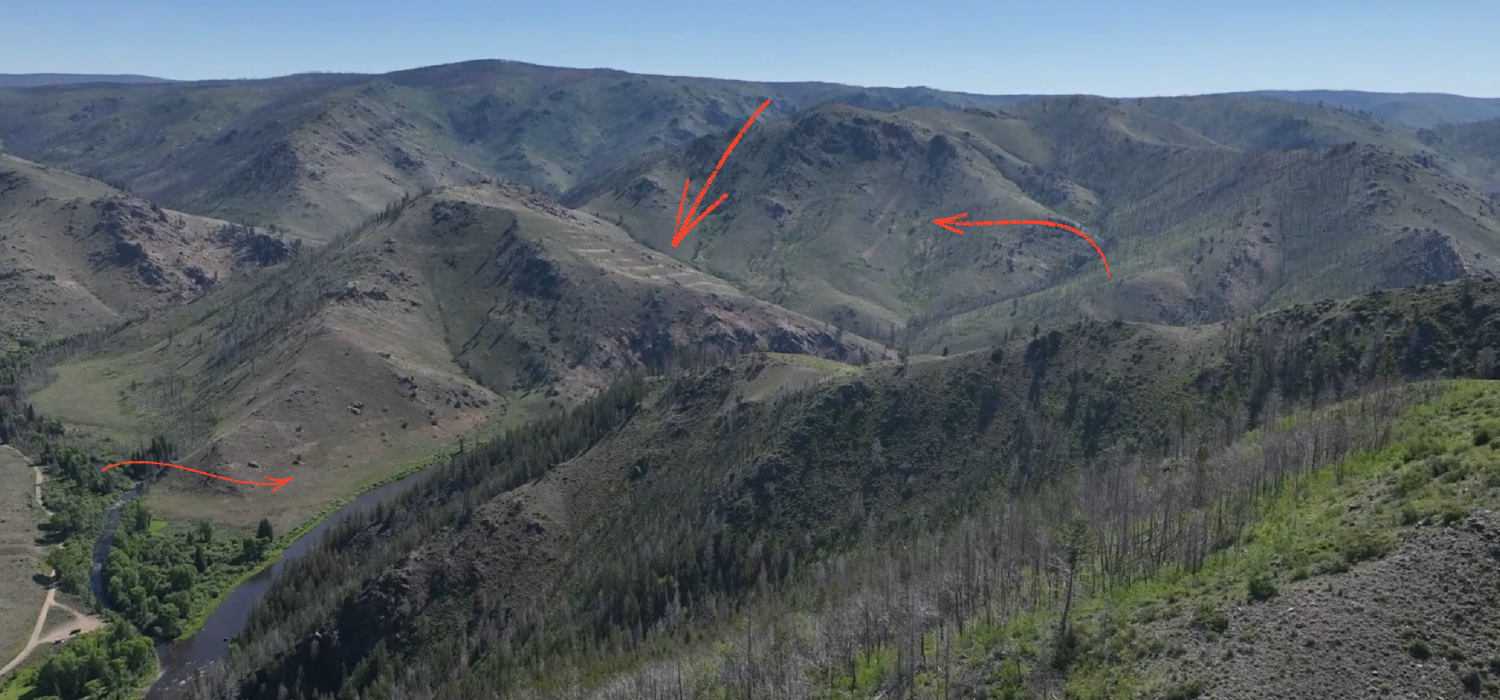
Aerial image above Douglas Creek in the Mullen Fire 2021 cheatgrass treatments - red arrows delineate skips and treatment buffer off the North Platte River.
The Mullen Fire burned through portions of the Sheep Mountain and Platte Valley mule deer herd units and nearly all occupiable bighorn sheep habitat in the Douglas Creek herd. The fire burned in a mosaic pattern, meaning it created a patchwork of high and low burn intensity across the southern portion of the Snowy Range Mountains, encompassing both the Platte River and Savage Run Wilderness Areas. When we think of wilderness, a picture of pristine, rugged landscapes lush with green vegetation and abundant wildlife comes to mind. The wilderness areas of the Medicine Bow-Routt National Forest are all of these things, and a great deal more—steep slopes dropping over 2,000 feet in elevation form deep canyon walls straight to the North Platte River. Aerial herbicide applications by helicopter are the most efficient and cost-effective tool land managers use to treat invasive annual grasses; however, aerial treatments are prohibited in wilderness areas. Recognizing the importance of these areas for wildlife and outdoor recreation, the Forest Service submitted a Wilderness Exemption request. Between 2021 and 2023, more than 17,1000 acres were aerially treated with the herbicide indaziflam to combat cheatgrass infestations; over 6,000 of those acres were in wilderness.
Quality data and surveying are paramount to natural resource decision-making. Ten years before the Mullen Fire burned, Forest Service personnel and working group partners understood that cheatgrass expansion across Medicine Bow Forest needed management intervention. According to preliminary data in the USFS Invasive Plant Management Environmental Impact Statement, 97,461 acres of Medicine Bow-Routt National Forest were infested with cheatgrass—more than double the acreage of the next highest noxious weed listed (Medicine Bow-Routt National Forests and Thunder Basin National Grassland; Colorado and Wyoming; Medicine Bow-Routt National Forests and Thunder Basin National Grassland Invasive Plant Management Environmental Impact Statement, 2010). Monitoring efforts within the Forest and Mullen Fire burn scar have continued following the 2021 herbicide treatment—150 monitoring plots were established in treated and untreated burned areas. Following treatment, natural resource managers reported a large decrease in cheatgrass across treated areas and recovery of native, perennial vegetation.
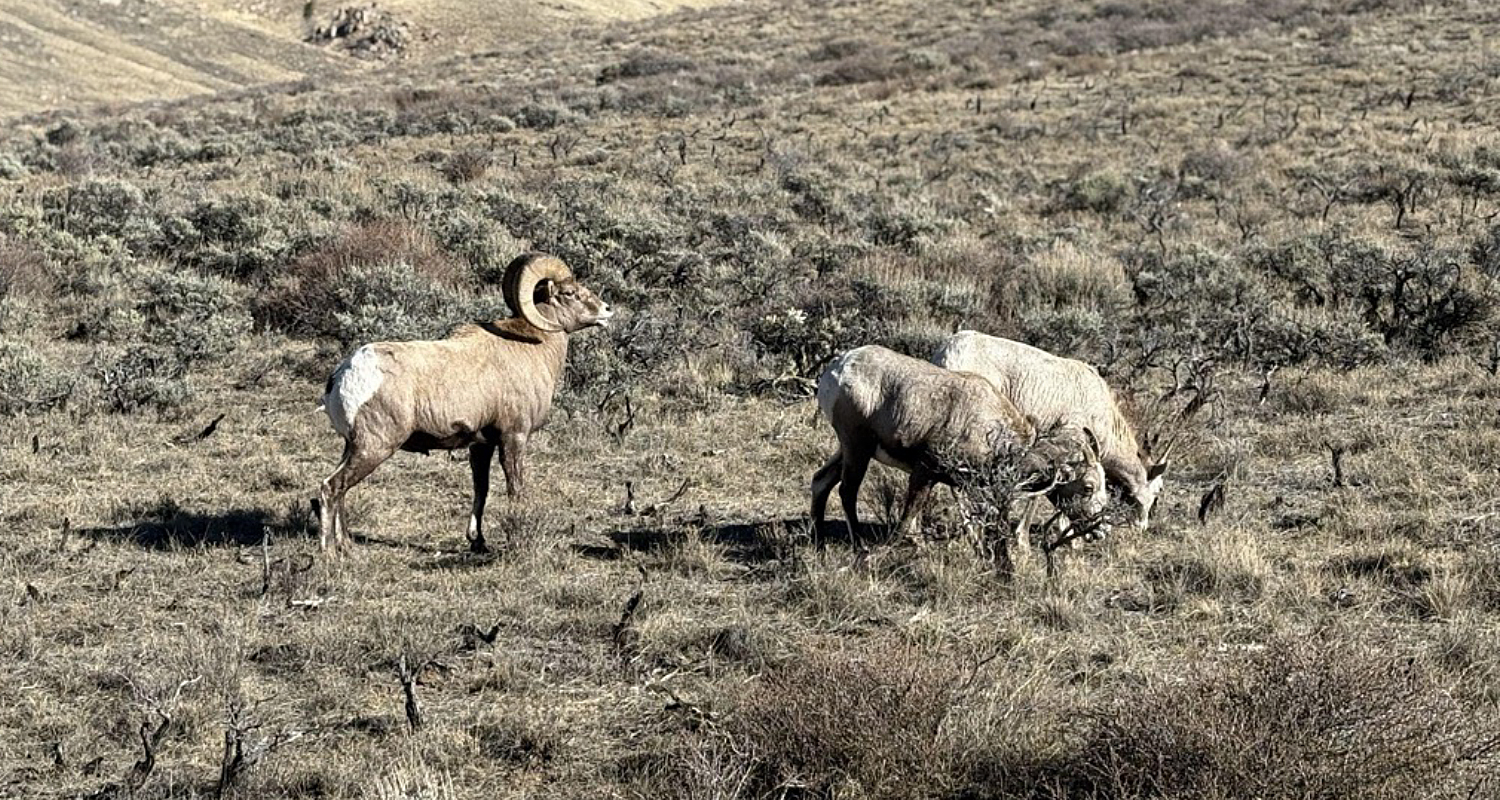
Douglas Creek bighorn sheep foraging among burned shrub skeletons within the burn scar.
Beginning in 2024, natural resource managers started to observe "breaks" or “skips” in the initial treatment and areas excluded during the initial treatment where cheatgrass was increasing. Managers determined a follow-up treatment would be necessary and started securing funding. The Wyoming Chapter of the Wild Sheep Foundation has played a critical role in helping the Wyoming Game and Fish Department monitor bighorn sheep from the Douglas Creek herd both pre- and post-fire, as well as contributed funding for the initial treatment post-fire. With their support, the Mullen Fire retreatment project was nominated as the appeal project at the Wild Sheep Foundation’s 18th Chapter & Affiliates Summit. The Wild Sheep Foundation and its Chapters and Affiliates pledged $213,500 to aid in retreating the Mullen Fire burn scar. Led by Carbon County Weed and Pest, over 8,700 acres were treated on the western slope of the burn scar in 2026, and 6,000 acres are planned for 2027. Managers hope ongoing habitat restoration will bolster the Douglas Creek bighorn sheep herd and encourage them to use newly created post-fire habitats.
Funding for this project was provided by the National Fish and Wildlife Foundation, the Western Association of Fish and Wildlife Agencies, Wyoming Wildlife and Natural Resource Trust, Wyoming Governor’s Big Game License Coalition, Rocky Mountain Elk Foundation, the United States Forest Service, Wyoming Department of Agriculture Pesticide Registration Fee Grant, Wild Sheep Foundation, Wyoming Wild Sheep Foundation, Texas Bighorn Society, Rocky Mountain Bighorn Society, Alaska WSF, Arizona Desert Bighorn Sheep Society, Wild Sheep Society of British Columbia, Midwest Chapter WSF, New Mexico WSF, Washington WSF, Idaho WSF, Iowa Foundation for North American Wild Sheep, WSF Alberta, Oregon WSF, Eastern Chapter Wild Sheep Foundation, Montana WSF, Fraternity of the Desert Bighorn, Utah WSF, and Bryan & Barbara Bartlett.
Tags: Bighorn Sheep, Conservation